
Alternative Provision
Building a new generation of civic institutions

It’s hard to think of any policy less popular than housing asylum seekers in hotels. For those who think we are too generous to potential refugees, it’s a symbol of decadent luxury, taking over what used to be civic buildings. Those who support refugee programmes see hotels as a miserable stop-gap for someone fleeing persecution who wants the chance to make a real life for themselves and their families.
So it’s no surprise, politically, that our putative next Prime Minister Andy Burnham has promised to ‘tear up the contracts’ with hoteliers. What’s more of a surprise is his lack of any real solution. He suggests putting local authorities in charge, even though localising the issue to councils does nothing to resolve it. After all, you are still looking for buildings with roofs and beds, and councils have no more ability to magic them up than national government does. Local authorities already house homeless families in B&Bs when they have to: give them a new set of people to house and they will face the same limited options.
After all: government did not start putting asylum seekers into hotels because they thought it would be fun. They did it because they were out of options. And housing asylum seekers is not the only problem for which this is true.
For an increasing number of the most politically challenging and expensive things the state needs to provide, there is no provider that works. Private provision is frequently worse: extractive, expensive, and structurally incentivised to cut corners. We have watched this play out in children’s homes, in social care, in probation: outsourced public services that cost more than the thing they replaced and deliver less. The simple answer from the left is to insource everything. But public provision carries all the disadvantages of sclerotic bureaucracy: restrictive employment contracts, constrained public balance sheets, and the kind of low public trust that makes every failure a front page and every innovation a risk nobody will sign off.
Today I want to argue that government – and philanthropists – need to think very differently if we are to rebuild not just state but national capacity. We need a movement to build alternative provision: large-scale, mission-driven capacity to solve the problems that the state cannot.
An old idea
This is a pretty old idea. Most public services started out as charitable endeavours, funded philanthropically, by the communities who benefited, or both. All our oldest hospitals and social housing providers. The great mutual insurers and friendly societies. The Scouts and the Guides. Citizens Advice. The Open University. The Consumers’ Association (now Which?).
These were not government programmes and not private companies. They were something else: mission-driven institutions built to last, governed for public benefit. That separation made, and continues to make them, capable of attracting volunteers and philanthropic capital in a way that the state never can. It also enables them to build and hold public trust in combinations that neither the state nor the market can replicate.
We have not built anything like this for a generation. The assumption that has dominated social policy for thirty years is that the state should commission and the market should deliver - and where the market fails, you regulate it harder, or you replace the contractor, or you set up a new inspection regime. What you do not do is build something different from scratch, because that is slow and uncertain and requires a tolerance for risk and a time horizon that the political cycle does not naturally support.
Having tidied up all the hospitals into the NHS, all the housing providers into Registered Social Landlords, we have started to believe that the state’s job is to standardise, rather than enable. We have imagined that all the important things already exist and just need to be kept in line. What a failure of imagination.
The result is a landscape of gaps: things the country needs that nobody is building, because the economics don’t work for private capital and the politics don’t work for direct public provision. Those gaps are structural and they are getting worse.
Let’s be specific
First, let’s go back to asylum housing. Remember some of Britain’s proudest stories about refugees: the families that took in Jewish children sent on the Kinder Transport, or the rural families that took in evacuees. Think of Ukraine, where volunteers stepped forward in droves to offer spare bedrooms and homes to people fleeing the invasion. How have we forgotten this when it comes to asylum seekers? Why do we only want big contracts with big providers to hide people away? If I were one of the many serious philanthropists interested in refugee policy, I’d be taking the first risk and investing the first capital in a new provider, charitable in purpose, human in approach, and free to take the risks the state cannot.
Residential care shares much of the same market structure: high-touch human services running inside real estate businesses. The people you are caring for – whether they are frail elderly, learning disabled, or children in care - are vulnerable. The buildings they live in are the assets on the balance sheet. In a purely commercial model, the incentive is always to sweat the asset and cut the care - to do the minimum that regulation requires and bank the rest. We have watched this dynamic play out in children’s homes for two decades: a market dominated by a small number of private equity-backed providers, with occupancy rates that make the economics work only when the homes are full regardless of need, and inspection regimes that catch the worst but cannot change the underlying incentive structure.
If we want to bring the cost of the state back in line with what voters are willing to pay for – we need to address that structural gap. Collaborate with philanthropists and volunteers to build mission-driven providers we can turn to instead of the private equity industry.
High street housebuilding is stuck for a different reason. Small urban sites - the gap between two shops, the three floors above the estate agent, the car park behind the high street – all have enormous potential for housebuilding, with none of the downsides of urban sprawl. By bringing more people into denser town centres we can bring life back to high streets.
But small sites have high costs: complex planning, difficult ground conditions, bespoke design requirements, awkward logistics. Large private housebuilders will not touch them because the margins are too thin. Small developers will, but they lack the capacity to build expertise across multiple sites, and their cost of capital is higher.
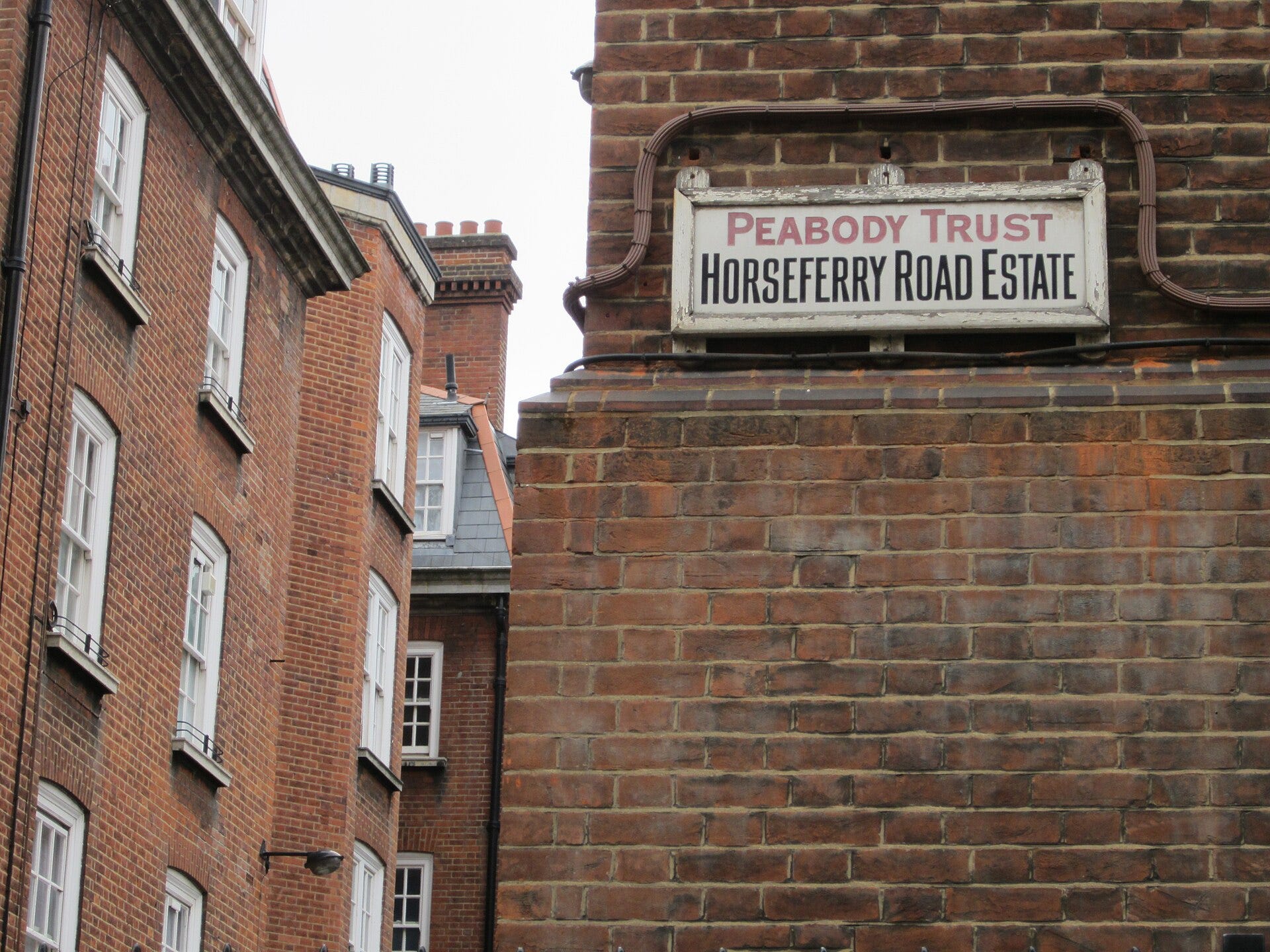
What Britain needs is a mission-driven developer, founded and capitalised by a new George Peabody that specialises in small urban sites. It would build expertise by working across many of them, develop standard approaches that reduce costs without sacrificing quality, and go relentlessly after the sites with social as well as economic value, because its board is not required to make a profit, just recycle capital for public good.
Civic technology. The technology that public services run on is dominated by a small number of large suppliers whose lock-in is near-total and whose interests are their own. We have supplier capture for technology, driving up the costs of everyday services across the education, health and local government sectors. This is not going to be resolved by the market. Public sector commissioners and operators need to collaborate to build technology they collectively own.
Local media is the informational infrastructure of democratic life, and it remains in crisis. I often wish Facebook had gone local, making the most of its unique insight into who lives near whom and shares their interests; it could have been the dominant force for rebuilding community life. But instead it turned into ad slop and misinformation provision for the elderly. Imagination and talent is now going into great local reporting with outlets like Manchester Mill and London Centric, but philanthropy should be getting behind them at scale, just as Victorians did.
Repair cafes (and other franchise models). Many of you will think this is niche but I am a super-fan of repair cafes. They enable community, save money for people, protect the environment, and increase our connection to the objects that make up so much of our daily lives. While they are thriving in many places, it seems to me many would benefit from the back-up of a national infrastructure. I’m endlessly impressed by the Felix Project, which merged with Fare Share, with huge ambition to bring wasted food to people who need it. That scale enables innovation to solve the hardest problems, whether that’s what to do with a national glut of courgettes or how to manage logistics for perishables across multiple sites. What other great local provision could be enabled by building this kind of ‘spine’?
OK, but how?
I’m talking about building up things that the nation wants, but the government doesn’t directly control. So my starting intellectual model is not public service reform but industrial strategy, for which there is an increasingly clear playbook.
It rests on four interconnected components, which can each be seen in programmes like Sovereign AI, the National Security Strategic Innovation Fund, and the UKRI Missions Accelerator:
Demand side support: a commitment to be ‘customer zero’ for the innovations the market or society need.
Supply side support: direct support for early stage innovations, including proof of concept and first of a kind trials.
Financing availability: equity investment and loan support for start-up and scale-up innovations, which for civil society can be enabled by Better Society Capital.
Learning infrastructure and regulatory space: access to data and opportunities to test and learn with regulators and commissioners.
Crucially, Innovate UK is moving away from supporting everything a little bit to concentrate its resources on the biggest bets: the highest potential companies and the most critical sectors.
We need more of that mindset when it comes to building civil society assets. Yes: we need to support the grassroots capability of the small, but we also need to place big bets. ‘Charitable’ and ‘mission driven’ do not need to mean small. Lloyds of London. Novo Nordisk. Both are global companies, but locked into a structure that secures their governance for public good.
Instead of assuming that the answer is grand new state bureaucracies like Great British Energy or Great British Railways, we should be building capacity that stands beyond the political and financial boundaries of government: institutions that can outlast administrations, attract multiple forms of capital, and serve the public interest permanently.
So what would each component of an industrial strategy for civil society look like?
Demand-side support means government making long-term purchasing commitments that give mission-driven providers the revenue certainty to capitalise properly. Government as anchor customer is a powerful tool it has barely used in this space. The great Victorian civic institutions were not built on single year grants at loss-making margins.
Supply-side support means early investment in proving models that the market will not fund and the state will not risk. This is where philanthropy has the clearest role: as first-loss capital, willing to back proof-of-concept work - but Innovate UK should also step in, backing the most important social as well as commercial innovation.
Financing availability means not just grants, but loans, and blended finance structures that can hold together philanthropic, public and private capital in the right combination. Better Society Capital was set up to do this - with greater ambition and more clarity it can be a lynchpin of building the nation’s next generation of civic institutions.
Learning infrastructure and regulatory space means creating the conditions for new models to be tested without being crushed by the compliance demands designed for mature providers. A new model of community palliative care needs commissioners willing to fund learning, not just delivery. A mission-driven housebuilder working across multiple high street sites needs a planning system that can process small sites at speed.
I’m looking at you, my richest friends
To make this possible, philanthropists needs to step up their ambition. The British philanthropic tradition has become too cautious, too focused on the small and the local, too comfortable with funding pilots that never scale. Science is having a moment when it comes to bigger ambitions from donors - look at Renaissance Philanthropy, the Ellison Institute, Coefficient Giving. But no-one is placing similar size bets on civic capacity, and they must.
How much longer can we stand paralysed and baffled by the collapse of confidence in the state? How much longer can we make promises of tearing up the contracts we don’t like without a serious plan to structure contracts that we do like?
The Victorians did not wring their hands about the inadequacy of the state and then vote for whoever promised to be toughest on the undeserving poor. They built things. They founded institutions that are still here, still serving the public, still attracting volunteers and donors and trust, long after the politicians of that era have been forgotten. They understood that the gaps the state cannot fill and the market will not fill are not someone else’s problem. They are ours.
We have the philanthropists. We have the policy tools. We have, in many cases, a reasonably clear idea of what needs to be built. What we have lacked is the ambition to think at the right scale, and the patience to build for the long term rather than the political cycle.
So what are we waiting for?
PS I’m building a couple of modest institutions myself (thanks to very generous support from donors). If you’re interested in getting involved with the National Pain Institute or our emerging donor collaborative on End of Life Care, drop me a line.
Community Land Trusts (https://www.communitylandtrusts.org.uk/about-clts/) are a good example of what you are calling for. But a lot have been created by enthusiastic local people and sadly not go very far for lack of a donor or benefactor to give them land to develop. Some have tried to bid for assets of community value but get out-bid by for-profit developers.
On asylum accommodation, we have a place in my town, Acacia Court (https://www.kentonline.co.uk/faversham/news/former-care-home-to-house-asylum-seeking-children-301048/). It was a derelict building for 10 years attracting anti-social behaviour. No private developer wanted to buy the site. In 2024, the Home Office financed repair of into a home for around 30 unaccompanied asylum seeking children who spend two weeks there before going into the national transfer scheme. It has been a win-win. The crime hotspot was cleared up and when UASC no longer need it, it will remain owned by the local authority to put to another use.
This is brilliant and has a lot of shared thinking with Social Innovation by Geoff Mulgan. I wondered if you might have time to look at my model for a new civic institution, The Public Plate, a model to scale a network of public restaurants.